
A high-brightness shop window display: easy to read, even with the sun on the glass
A high-brightness screen is much brighter than an ordinary screen. It is made for daylight behind glass, so what you show in the shop window stays easy to read even on a sunny afternoon. On the first visit, an installation partner from your region measures where the sun falls on your window and chooses the screen to match. Will Impress takes care of the content, for €39 per screen per month on an annual contract.

What a high-brightness screen brings your shop window
Easy to read, even when the sun is on the window
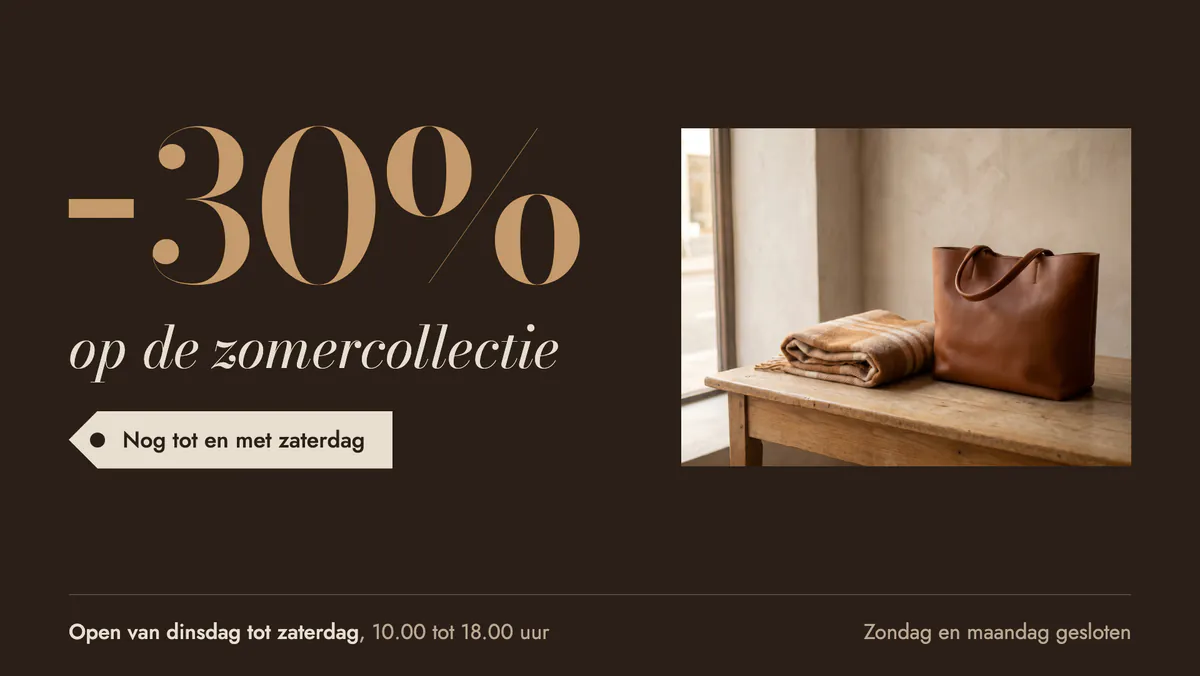
An ordinary screen fades as soon as the sun is on the window. A high-brightness screen keeps the image and the prices sharp.
A shop window that works during the day too
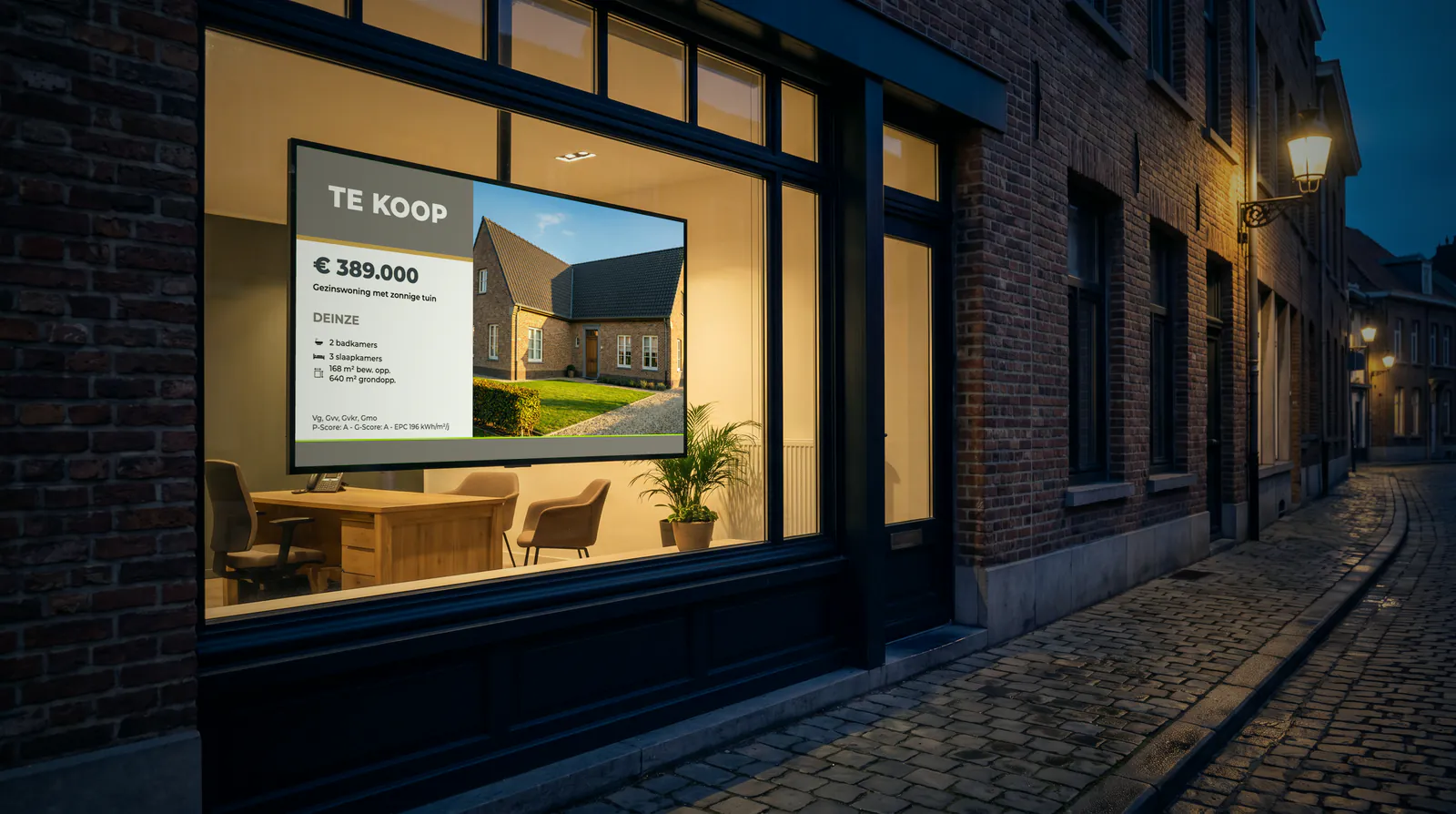
Many people walk past during the day. That is exactly when your offer needs to be easy to read, even on the sunny side of the street.
A screen that suits your window
The partner looks at your window and the sun and chooses a screen for it, instead of a screen picked at random.
Why a shop window needs a different screen
A shop window is often in the sun. An ordinary screen cannot cope with that: the image fades, the glass reflects and a price or an offer can no longer be read from the street. A high-brightness screen is built for that spot. It gives off much more light, so the image holds up.
How bright is bright enough
The brightness of a screen is measured in nits. An ordinary indoor screen reaches about 500 nits. A screen for behind a shop window reaches 3,000 to 4,000 nits, six to eight times more. What you need depends on your window:
- A window in the shade or facing north, with no sun on the glass: an ordinary indoor screen, around 500 nits, may be enough.
- Sun on the glass, for part of the day or all afternoon: a shop window display of 3,000 to 4,000 nits.
The partner measures your window on the first visit and tells you which of the two you need.
What the installation partner does
The partner visits you and measures where the sun falls on your window and how close to the glass the screen can hang. Based on that, the partner chooses a screen with enough brightness, installs it safely and connects it. What the screen and its installation cost is in the partner's quote.
How much power a shop window display uses
A 55-inch shop window display typically uses 375 to 450 watts. A worked example: 375 watts × 12 hours × 365 days is 1,643 kWh a year. At 10 cents per kWh, that is about €164 a year.
Will Impress sets the screen to fixed hours, for example from closing time until the morning. If the screen has its own panel, the image goes black and the brightness goes to the minimum. Whether the device itself also switches off depends on the screen. Your partner will tell you which applies.
What Will Impress does
We take care of what is on the screen. We design the content in your house style, show it on the screen and monitor the screen remotely, so it keeps running. You make later changes yourself in a few clicks, in your own account. If you would rather leave them to us, we make them for an extra fee, price on request. It costs €39 per screen per month, on an annual contract.
Also read how to choose the right screen for your shop window, or request a proposal straight away.
€39 per screen per month, on an annual contract. The screen and its installation are a one-off quote from an installation partner in your region. More about pricing
Frequently asked questions
Why is an ordinary screen not enough in my shop window?
An ordinary screen is made for indoors, without sun on the image. Behind glass, daylight falls on it and the glass reflects. The image then turns grey and a price can no longer be read from the street.
How bright is a high-brightness screen?
An ordinary indoor screen reaches about 500 nits. A screen for behind a shop window reaches 3,000 to 4,000 nits, six to eight times more. The right figure depends on your window, so your partner chooses it after a visit.
Am I allowed to leave my shop window display on at night?
In Belgium, no general rule prohibits a lit shop window display at night. Municipalities regulate light nuisance in their police regulations, and some ask for advertising and shop window lighting to be switched off when there are few people in the street. So check your municipality's regulations. We set fixed hours, so the image stays dark outside those hours.
Is a bright screen not too glaring in the evening?
Usually not. On most high-brightness screens, the brightness can be adjusted, so the screen can shine more softly in the evening than on a sunny afternoon. Your partner looks at this with you during the installation.
What does a shop window display that stays on at night cost?
A 55-inch shop window display typically uses 375 to 450 watts. At 375 watts, 12 hours a day, that is 1,643 kWh a year, about €164 at 10 cents per kWh. If the image goes black and to the lowest brightness at night, consumption falls. Whether the device itself switches off depends on the screen.
What does the content for a high-brightness screen cost?
€39 per screen per month, on an annual contract. You pay for the screen and its installation once, on a quote from an installation partner in your region.
Ready for your own screen?
Request a proposal. We will contact you within two working days and visit you with an installation partner from your region.
Request a proposalAlso of interest
Screens
Which screen suits your shop window.
ViewDouble-sided display
A double-sided display shows your offer to passers-by and to customers inside, with one screen. Will Impress does the content, €39 per screen per month.
ViewFloor-standing screen
A floor-standing screen, also called a totem or digital pillar, stands where nothing can hang. Will Impress does the content, €39 per screen per month.
ViewDigital poster
A digital poster is a portrait screen that replaces a printed poster. Will Impress takes care of the content, for €39 per screen per month.
ViewShop window display for estate agents
Your listings with EPC label and mandatory details in the window, automatically.
ViewScreen in the window
Your menu or dish of the day visible to people walking by.
ViewShop and boutique
Your collection and offers in the window, without printing.
View