
What is narrowcasting?
Narrowcasting is information on a screen that is meant for one audience in one place, such as the customers in your shop or the patients in your waiting room. Digital signage is the broader term for any digital screen with messages; narrowcasting is used mainly in Belgium and the Netherlands and puts the emphasis on that one audience.
What narrowcasting is
Narrowcasting is a screen that shows a message to the people who are in that place. The word was formed after broadcasting, transmitting to everyone. A broadcaster reaches the whole country. Narrowcasting chooses one audience: the customers in your shop, the guests at your bar or the patients in your waiting room.
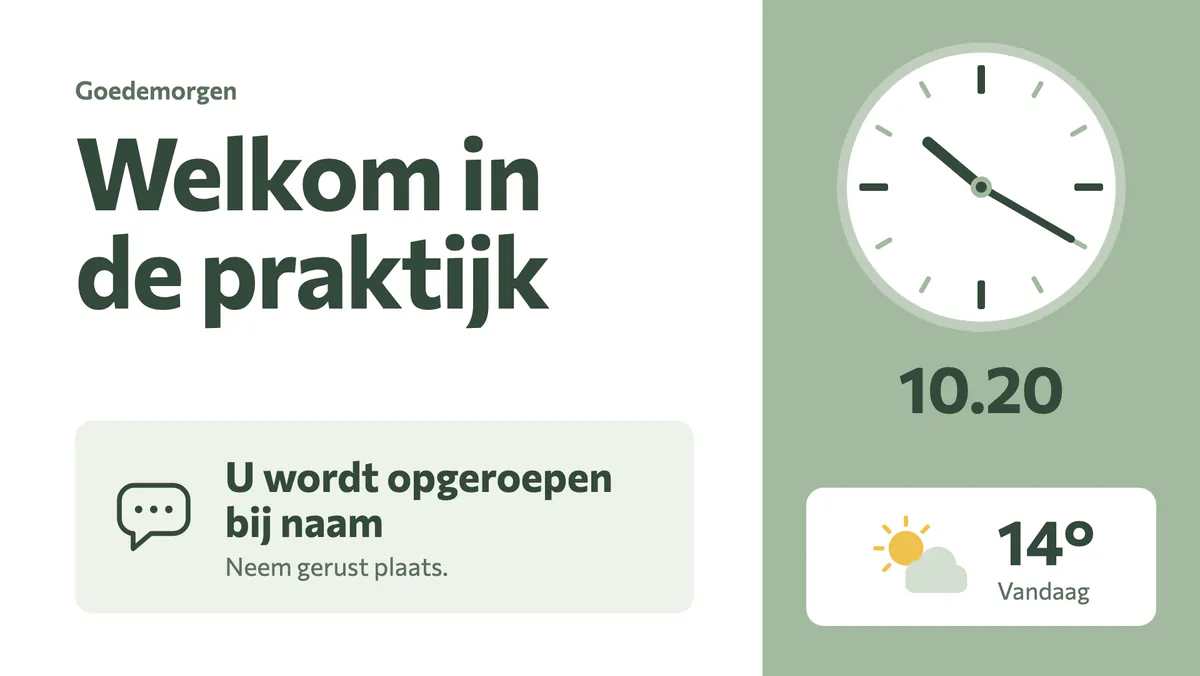
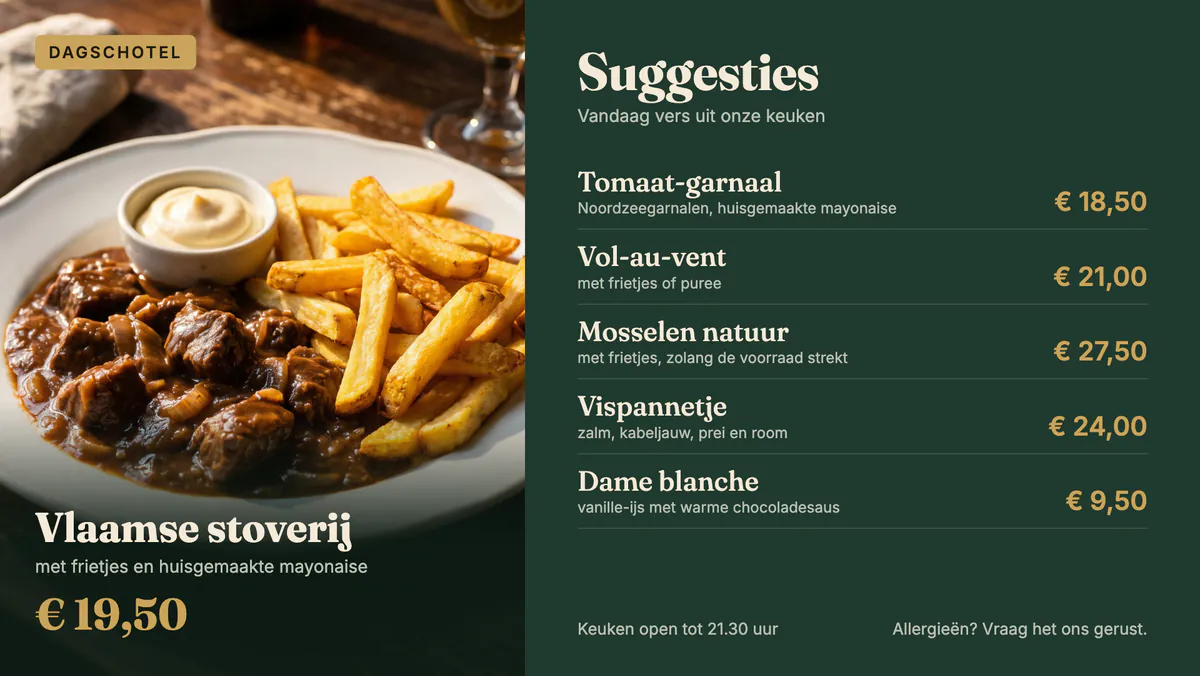
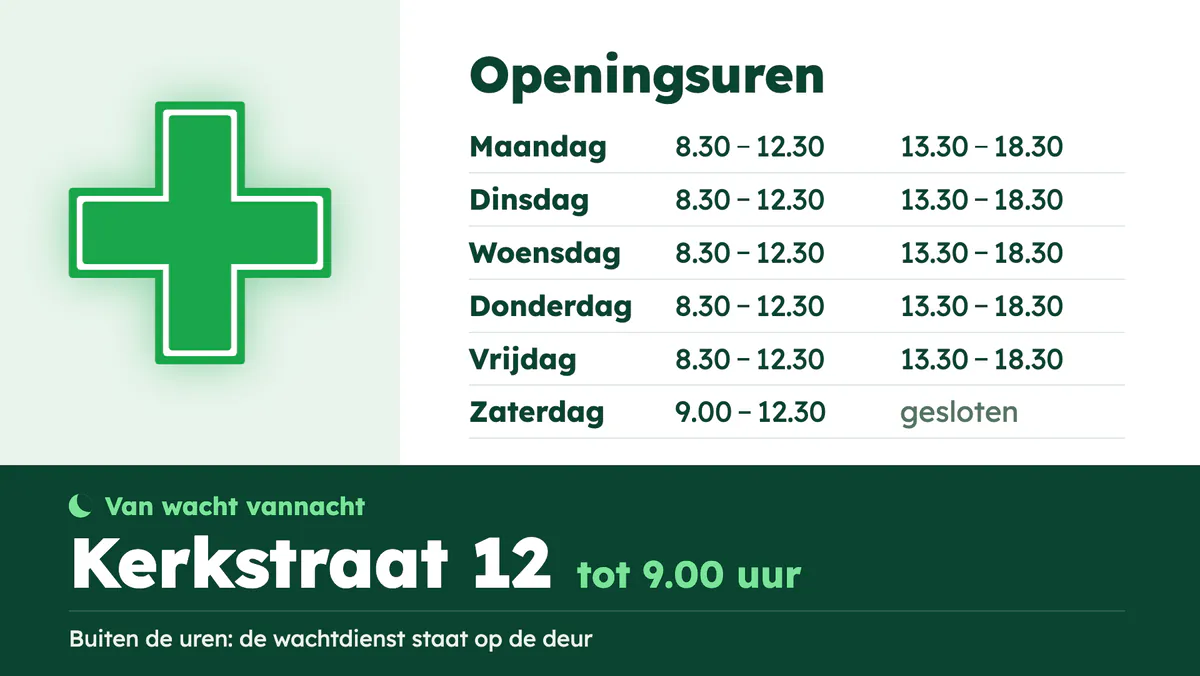
What is on the screen suits that place. In a waiting room, that means your opening hours and where patients can go outside opening hours. At the bar, it is the dish of the day with its price. In a shop window, it is what you sell, for people walking past.
The screen can also show something different at each time of day. A café puts the dish of the day at the top until lunch, and the evening menu after that. A pharmacy shows its opening hours during the day and the duty pharmacy after closing time.
Narrowcasting or digital signage?
They are the same screens, seen from two sides. Digital signage is the general term for any digital screen with messages, from a large advertising screen along the road to the menu board in a brasserie. That term says what it is: a digital sign. Narrowcasting says who it is for: one audience in one place.
You hear digital signage all over the world. Narrowcasting is used mainly in Belgium and the Netherlands; in English, people usually just say digital signage. For one particular kind of screen, there is usually a word of its own: a shop window display or a digital shop window in the window, a menu board at the bar, a waiting room display in the practice.
For you, the word makes little difference. Whether a supplier calls it narrowcasting or digital signage, you get a screen with your messages. What counts is what is on it and who keeps it up to date. The broader term is explained in the guide what is digital signage.
Examples
- In the waiting room: a GP welcomes people as they come in with the time and the weather, and then shows the opening hours and news from the practice. At the bottom is where patients can go outside opening hours: 1733 in Belgium and the out-of-hours GP service in the Netherlands. Read more about the screen for the GP practice.
- At the bar: a brasserie hangs a menu board with the dish of the day, the suggestions and their prices. Guests read it from their table, and the staff do not have to list the suggestions at every table.
- In the shop window: a pharmacy shows its opening hours and the advice of the month in its window. When the door is closed, anyone standing at the window reads which pharmacy is on duty.
- In the office: an estate agency shows its properties in the waiting area, straight from its agency software. If a group has multiple offices, each screen shows only the listings of the office where it hangs.
What you need
For narrowcasting, you need three things. The first is a screen that suits the place: in a shop window, a shop window display bright enough for sun on the glass; in a waiting room or at the bar, an indoor screen. The second is someone who mounts and connects the screen. The third is someone who makes sure that what is on it is correct, even when your hours or your prices change.
At Will Impress, an installation partner from your region advises the screen, supplies it and mounts it. You can read which screen suits which place on the screens page. Will Impress designs the screen in your house style, sets up what can run by itself, such as your opening hours, and monitors the screen remotely. That costs €39 per screen per month, on an annual contract. You pay for the screen and its installation once, on a quote from the installation partner.
You add a new offer or a holiday closure to the screen yourself, in a few clicks. If you would rather leave that to us, we do it as a paid extra, with a price on request. What the monthly price includes is on the pricing page.
How to start
You request a proposal. We will contact you within two working days, and then we visit you with an installation partner from your region. Together, we look at where the screen should go, so your audience sees it: from a chair in the waiting room, from a table in your business or from the street.
We make the design and prepare the first messages, and the partner mounts the screen. After that, we monitor it remotely. How that works step by step is explained on the how it works page.
Frequently asked questions
Is narrowcasting the same as digital signage?
Both words refer to the same screens. Digital signage is the broader term for any digital screen with messages. Narrowcasting puts the emphasis on the audience: one group of people in one place, such as your customers or your patients. For what you get, the word makes no difference.
What does the word narrowcasting mean?
It is an English word, formed after broadcasting: transmitting to everyone. Narrowcasting puts narrow in the place of broad. Where a broadcaster reaches the whole country, narrowcasting is aimed at the people in one place, such as a waiting room, a shop or an office.
Where is narrowcasting used?
In places where people wait or walk past and need to know something. Think of the waiting room of a GP, dentist or vet, the bar of a café, the shop window of a shop or pharmacy and the office of an estate agent. Such a screen can also hang in a travel agency, an insurance office or a sales pavilion at a new development.
What does narrowcasting cost for a small business?
At Will Impress, you pay €39 per screen per month, on an annual contract, even if you have only one screen. That includes the design in your house style, remote monitoring and personal support. You pay for the screen and its installation once, on a quote from an installation partner in your region.
Can narrowcasting show something different in the evening than during the day?
Yes, the screen can show something different at each time of day. In the window of a pharmacy, the opening hours are shown during the day and the duty pharmacy after closing time. A café switches from the dish of the day to the evening menu after lunch. We set up with you at the start when the screen switches.
Ready for your own screen?
Request a proposal. We will contact you within two working days and visit you with an installation partner from your region.
Request a proposalRead on
Healthcare
A screen in the waiting room of your GP, dental or veterinary practice.
ViewGP practice
Your opening hours and the out-of-hours service on a screen in the waiting room.
ViewDigital menu board
Your dish of the day and your suggestions at the bar, in the style of your business.
ViewScreens for multiple offices
Each office of your group shows its own properties, in one house style.
ViewWhat is digital signage
The broader term, what it brings and what it costs.
View